

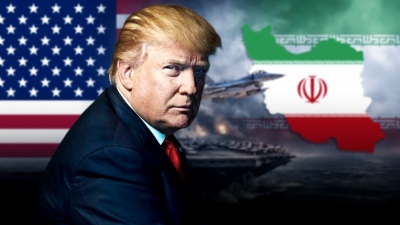
All signs indicate that it is simply a matter of time before a new round of military operations by the US and Israel against Iran erupts. Analysts estimate that it is highly probable the new assault will materialize within the next 24 to 48 hours. US President Donald Trump has warned Tehran of total devastation and absolute flattening if an immediate agreement is not reached. Republican senators are calling on Trump to strike the Iranian regime increasingly harder, specifically targeting its energy installations and infrastructure, until the Iranians capitulate. Sources report that targeting packages have already been finalized, while definitive executive decisions are likely to be made during a fresh meeting between the American president and his national security team on Tuesday, May 19. American transport aircraft are moving tons of munitions from Germany to Tel Aviv, while the Israeli military has been placed on maximum alert, maintaining that it awaits the official command from the US to initiate a new wave of aerial bombardments. For their part, the Iranians declare they are determined not to retreat, intending to fight to the absolute end in a conflict they view as existential for both the regime and the state. Within this framework, they warn the Americans that if they attempt a new offensive, they can forget about all of their military bases in the southern sector of the Persian Gulf. Tehran stresses that it maintains absolute control over the Strait of Hormuz, a reality that perpetuates intense volatility in energy pricing and severely threatens the broader global economy. Nevertheless, Tehran notes that diplomatic channels with the Americans remain open, with proposals and blueprints being exchanged via Pakistan for a prospective settlement; intelligence suggests that Tehran has submitted a newly revised framework.
Baghaei (Iranian Ministry of Foreign Affairs): We are preparing a new framework for Hormuz, contacts with the US continue
In official statements, Esmaeil Baghaei, the spokesman for the Iranian Ministry of Foreign Affairs, maintained that diplomatic contact with the US remains ongoing. Referring to the high-stakes negotiations and recent reports regarding American overtures, he dismissed that specific intelligence as mere speculation. "The dialogue process is continuing. Following our presentation of the 14-point stabilization plan, the American side formulated its technical observations, and we subsequently presented our own counter-views. Through the Pakistani mediator, we received a series of corrective notes. The day after our positions were dispatched by Pakistan, we received fresh proposals from the opposing side. Iran thoroughly evaluated these modifications and transmitted its official position to the US yesterday via Pakistan," Baghaei stated. "Iran's sovereign right to domestic enrichment is explicitly recognized under the Non-Proliferation Treaty (NPT), and it requires verification from no external power," Baghaei added. He asserted that there is a complete absence of trust regarding the US. "They have already betrayed diplomacy on numerous occasions and witnessed the consequences. The US is fundamentally not viewed as a credible interlocutor. Their contradictory rhetoric has caused the international community to stop taking American diplomacy seriously," Baghaei emphasized, noting that Iran is fully prepared for any operational scenario. Furthermore, he highlighted that high-level delegations from Iran and Oman convened to negotiate a secure transit mechanism for maritime shipping navigating the Strait of Hormuz. He stated that the bilateral delegations met last week, focusing exclusively on establishing a framework rooted in international law to prepare a dedicated regulatory mechanism to execute this maritime mission. According to Baghaei, Iran remains in close contact with Oman and other regional stakeholders, underlining that these security talks will continue into next week.
Dozens of aircraft transport munitions to Tel Aviv
Israeli media outlets report that dozens of US cargo aircraft transporting heavy military equipment and munitions from strategic logistics bases in Germany have touched down at Tel Aviv's international airport over the past 24 hours. According to intelligence briefings, these massive airlifts of combat stockpiles represent an active phase of military preparations to resume the war against Iran.
Nothing will be left
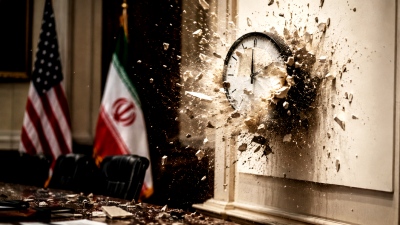
President Donald Trump convened a high-level meeting last Saturday, May 16, with senior members of his administration's national security apparatus to chart the trajectory of the military conflict with Iran, according to a source cited by CNN. This meeting took place just one day before he publicly declared that Tehran "had better move fast, otherwise there will be nothing left of them." "For Iran, the clock is ticking down and they had better move FAST, or else nothing will be left of them. THE PRESSURE IS ON! President DJT," Trump posted across social media platforms on Sunday.
A critical situation briefing
Vice President JD Vance, Secretary of State Marco Rubio, CIA Director John Ratcliffe, and Special Envoy Steve Witkoff participated in the high-stakes strategy session, which was held at the president's golf club in Virginia, according to the same source. The critical gathering materialized mere hours after Trump returned to Washington from his pivotal state visit to China.
An increasingly impatient Trump
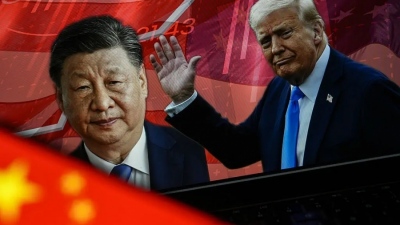
Trump is reportedly displaying mounting impatience with the manner in which Tehran is managing diplomatic negotiations, remaining highly dissatisfied with the continuous disruption of commercial shipping through the Strait of Hormuz and its volatile impact on global crude oil prices. Trump and his core advisory team intentionally deferred final decisions on how to proceed against Tehran during his diplomatic mission in Beijing. Multiple administration officials informed CNN that they desired to evaluate how talks between Trump and Chinese Leader Xi Jinping developed before formalizing their next geopolitical strategy.
Demanding a definitive settlement
Trump stated to Axios that he continues to believe Iran desires a diplomatic settlement, adding that he anticipates a fresh Iranian proposal which he hopes will be significantly better than the framework submitted a few days prior. Trump explicitly declined to establish a rigid deadline for the ongoing negotiations. "We want to make a deal. They are not where we need them to be. They will have to get there, otherwise they are going to get hit very hard, and they do not want that," Trump noted, adding that the US will strike Iran "significantly harder than before" if it fails to deliver a superior diplomatic framework.
Definitive decisions expected tomorrow, May 19
In recent days, Trump has been evaluating the resumption of large-scale military operations against Iran with greater gravity, viewing it as a mechanism to force a strategic compromise and terminate the war, as previously reported by CNN, despite his stated baseline preference for a diplomatic resolution. According to the source, Trump is expected to meet again with his national security team regarding the war early this week. As reported by Axios, citing two US officials, Trump is expected to convene his top national security cabinet on Tuesday, May 19, inside the White House Situation Room to thoroughly vet final military options.
Targeting matrices finalized
The Pentagon has already engineered a comprehensive suite of military strike plans in the event that Trump ultimately decides to authorize fresh offensives, according to sources familiar with the internal deliberations. The operational blueprints encompass highly targeted strikes against critical energy infrastructure and primary command nodes throughout Iran.
The countdown intensifies
President Trump affirmed during a telephone interview with Axios that "the clock is ticking away" for Iran and issued a stark warning that if the Iranian regime fails to tender a superior proposal for a settlement, "it will be hit far harder." American officials report that while Trump desires a comprehensive treaty to end the war, Iran's systemic rejection of his baseline demands and its refusal to make meaningful concessions on its nuclear program have forced military intervention options back to the forefront of the agenda.
Stinging critique from a former intelligence officer
Concurrently, Larry Johnson, a former officer and analyst for the Central Intelligence Agency (CIA), leveled sharp criticism against Washington's foreign policy doctrine, declaring that the war initiated by the United States against Iran has failed to serve the interests of the American public while exacerbating domestic economic strain. In highly pointed remarks, Johnson noted that American citizens are desperate for relief regarding fuel and food prices, yet the net result of the administration's policies has been diametrically opposed to those needs. "What we are witnessing right now is completely antithetical to what the American public wants, because we have initiated a war against Iran," said Johnson, who accused the US government and mainstream media networks of manipulating public perception. He argued that US citizens are being systematically conditioned to view nations as mortal enemies when they are not necessarily direct adversaries of Washington.
The five conditions for peace
On Sunday, May 17, the Fars news agency reported that Washington responded to Tehran's peace overture by dictating five mandatory conditions. These prerequisites include an absolute refusal to pay war reparations or unfreeze even 25% of sequestered Iranian financial assets; the immediate extraction from Iran and surrender to the US of 400 kilograms of enriched uranium; the restriction of Iranian nuclear activity to a single, heavily monitored domestic facility; and a conditional cessation of hostilities pegged strictly to the outcome of ongoing negotiations. In essence, these parameters directly contradict the draft treaty that Iran has repeatedly transmitted to the Americans. Specifically, in the latest iteration of its document, Tehran proposes:
-
The immediate termination of the war across all operational fronts;
-
The comprehensive lifting of economic sanctions;
-
The unhindering release of all frozen Iranian capital;
-
Financial compensation for structural damages incurred during military operations;
-
The formal recognition of the Islamic Republic of Iran's sovereign jurisdiction over the Strait of Hormuz.

IRGC: We maintain complete operational control of Hormuz
Iran maintains that the Strait of Hormuz has been placed entirely under the direct military oversight of the Islamic Revolutionary Guard Corps (IRGC). Iran declares that any maritime transit through this geostrategically vital chokepoint must be actively coordinated with the Iranian military and the IRGC naval command. The IRGC naval forces recently announced they are aggressively expanding their jurisdictional envelope over the Strait of Hormuz. They assert that the maritime passage is now under absolute IRGC military control, stating further that hostile foreign warships and military vessels will be prohibited from transiting the waterway entirely. Commercial vessels belonging to friendly nations will retain passage rights, but those flagged to adversarial states will be barred. Over the past two to three days, a marginal increase in commercial vessel traffic navigating the Strait of Hormuz was observed; intelligence indicates that roughly 30 to 40 merchant ships, primarily operated by Chinese corporations, cleared the transit zone. However, over the past 24 hours, zero maritime transits have been logged.
Iran issues a stark warning: Forget your regional bases
Iran will systematically neutralize all US military installations located throughout the southern littoral of the Persian Gulf, declared Ebrahim Zolfaghari, the official spokesman for the armed forces' central strategic command headquarters, "Khatam al-Anbiya." "Over the past 24 hours, the Islamic Revolutionary Guard Corps Navy has blocked the passage of every single vessel attempting to transit the Strait of Hormuz. In the immediate future, all American military bases in the southern sector of the Persian Gulf will be completely deactivated," Zolfaghari posted on the X platform, warning the Americans to brace for imminent tactical surprises.
The Oman Sea will become your graveyard
A senior Iranian official warned the United States to immediately terminate its maritime blockade, threatening that otherwise, "the Sea of Oman will become your graveyard." Mohsen Rezaei, a member of Iran's Expediency Discernment Council and a former commander-in-chief of the IRGC, cautioned the United States to lift its naval siege of Iranian ports, declaring that the Iranian military stands fully prepared for an expanded conflict. Speaking on state television, Rezaei stated: "We strongly advise the American military to end this siege before the Sea of Oman is converted into your graveyard." Rezaei classified the US naval blockade as an explicit act of war, maintaining that confronting it is Tehran's legitimate right. "The longer they prolong this naval blockade of Iran, the more severe the structural economic collateral damage will be for nations across the entire globe," he noted. Regarding negotiations to conclude the war, Rezaei stated that the United States must "demonstrate through verifiable actions that it is a reliable interlocutor. It is America that must now prove itself," he said. "Our armed forces have their fingers firmly on the trigger, while concurrently, diplomacy continues to be pursued." The US naval blockade commenced on April 13, and Trump has declared that it will remain rigidly in force until Iran accedes to a peace treaty dictated on Washington's terms.
Islamabad's diplomatic mediation efforts
Pakistan has assumed the role of the primary diplomatic mediator in the peace talks between the US and Iran. The Pakistani Minister of Interior visited Tehran on Saturday and Sunday for intensive consultations with senior Iranian officials aimed at hammering out a framework to terminate the war. Qatari Prime Minister Mohammed bin Abdulrahman Al Thani, who is also actively participating in the mediation track, held high-level discussions on Sunday with both his Pakistani counterpart and the Iranian Minister of Foreign Affairs. During these diplomatic engagements, Iranian officials maintained that the persistent military presence of the United States in the Middle East remains the root cause of regional instability. According to the Tasnim news agency, Iranian President Masoud Pezeshkian stated that the US and Israel "have consistently attempted to turn Islamic nations against one another through divisive stratagems and the deliberate cultivation of distrust," whereas "Iran sincerely pursues robust, stable, and good-neighborly relations with all Islamic states across the region."
Israel stands ready for a renewed US assault on Iran: Energy infrastructure designated as prime target
Trump also held an urgent telephone consultation on Sunday with Israeli Prime Minister Benjamin Netanyahu, according to an official Israeli prime ministerial spokesperson and a US official who briefed CNN. The Israeli military has been placed on high alert, fully prepared to integrate into prospective American offensives against Iran, according to multiple Israeli media reports. Israeli outlets report that the defense establishment is bracing for an imminent resumption of active hostilities with Iran, with public broadcaster Kan quoting an anonymous senior security official who stated that Israel will actively participate in any new American strikes, with a specific focus on neutralizing Iranian energy assets. Channel 12 news similarly characterized the conversation as transpiring "under the shadow of active preparations for renewed conflict in Iran," broadcasting that the Israel Defense Forces have entered a state of maximum readiness. According to Channel 12, Israel anticipates receiving a formal notification from the United States prior to the execution of any strike, though it remains unaware of the precise operational timeline for a definitive command decision. The same network noted that Trump is operating under immense diplomatic pressure—notably from China—to avoid becoming entangled in an expanded war with Iran, and to instead prioritize a negotiated diplomatic resolution.
Academic analysis: Trump's coercive strategy faces a dead end
Trita Parsi, executive vice president of the Quincy Institute, noted that both Iran and the United States appear to increasingly believe that initiating a new round of hostilities could artificially strengthen their respective bargaining positions in future rounds of talks. "I believe that Trump is giving serious consideration to authorizing additional military action," Parsi told Al Jazeera. "This reality in itself represents a clear signal that, despite the robust rhetoric emanating from the administration, they internally recognize that not only did the previous phase of the war fail, but the blockade—which was engineered to break Iranian resolve and avert this exact scenario—has also failed to deliver results," he noted. Parsi cautioned that both adversaries now seem trapped in the mindset "that an additional round of conflict will yield tactical advantages and a more powerful leverage point in future negotiations." Particularly on the Iranian side, he added, "those who championed this hawkish argument from the outset now feel entirely vindicated based on the operational trajectory of this war." Speaking to Al Jazeera, he noted that the foundational reason US–Iran talks remain locked in a total impasse is that Trump appears determined not to afford Iran an honorable diplomatic exit ramp that preserves its national dignity. "On the American side, there is an exceptionally powerful desire to ensure that any prospective deal—even one incorporating major American concessions—is perceived globally as a total capitulation of the Iranians to the US, and specifically to Trump himself," he stated. Parsi acknowledged that while both sovereign actors naturally seek to project a narrative of total victory, Trump's zero-sum approach makes meaningful diplomatic progress exceptionally difficult to achieve. "The core problem, in my estimation, is that from Trump's perspective, he is attempting to construct a victory narrative that completely invalidates and erases the victory narrative of the opposing side," he noted. "And this is precisely why they cannot break this diplomatic gridlock, because both actors possess an unyielding structural requirement to emerge from this process as the undisputed victor."
'It is coming in 24 to 48 hours' – Heavy pressure mounts on Trump for a fresh military offensive against Iran
The US could resume active warfare against Iran "within the next 24 to 48 hours." It appears highly probable that the United States will resume active military operations against Iran within the next one to two days, stated Mohamad Elmasry, a professor of Media Studies at the Doha Institute of Graduate Studies. This rapid escalation is manifesting because Trump is "operating under intense pressure from multiple competing factions," including Netanyahu as well as "highly dogmatic, hawkish figures" embedded within his own cabinet, Elmasry informed Al Jazeera. "He has failed to extract the structural capitulation he demanded from the Iranians and fully expected to receive," Elmasry stated, adding that Trump "simultaneously expected the broader diplomatic negotiations to yield a different trajectory," having harbored immense strategic expectations during his recent summit in China with his counterpart, Xi Jinping. Elmasry evaluated that while it would be highly prudent for Trump to de-escalate and terminate the conflict at this juncture, given that it has evolved into a genuine strategic catastrophe for him and the US on both political and macroeconomic levels, it remains highly improbable that he will choose that path. "This is because Trump can no longer return to the American electorate with a credible, clean declaration of victory."
www.bankingnews.gr





Σχόλια αναγνωστών